4.0 / 5

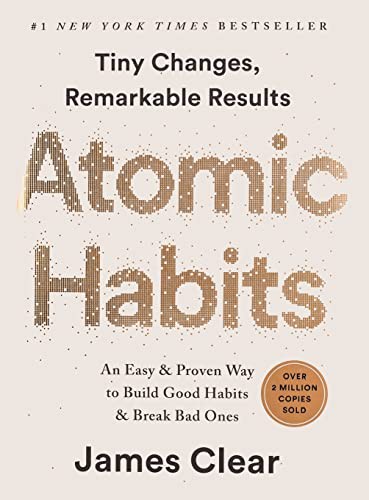
Atomic Habits

James Clear

Build the system and the results follow, as long as you don't build more system than the problem needs.

Most of it felt intuitive, but it was validating to see it written down. The idea I keep coming back to is that you fall to the level of your systems, and that a habit sticks once it becomes part of who you are. Every repetition is a vote for that identity, which makes the small daily version of a habit matter more than any single big effort.

The four laws work as a checklist: make it obvious, attractive, easy and satisfying, and invert each one to break a habit. Clear's use of the Ulysses pact fits alongside them. Decide while you're thinking clearly and lock the decision in, so your future self doesn't have to rely on willpower in the moment.

I try to apply the same thinking to my projects and dev work, turning one-off tasks into repeatable systems. The risk is overengineering, since a system only earns its keep if you'll actually run it again. It fits especially well with AI, where you can do a task once by hand and then fold it back into a system afterwards.

Finished
2023
Pages
320
On Goodreads
  • habits
  • systems

3.9 / 5

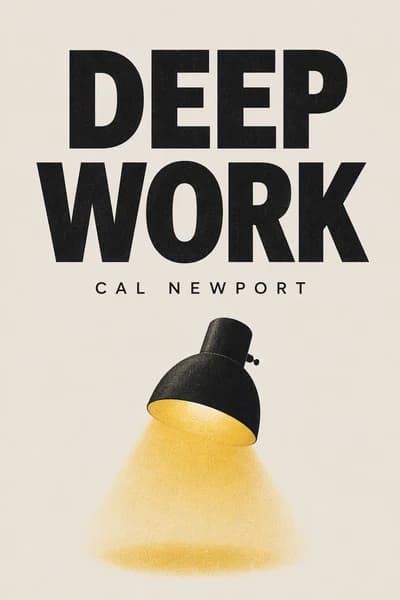
Deep Work

Cal Newport

Use the deep stretches to build whatever makes the everyday easier.

Pairs well with Atomic Habits. I try to automate the rhythm of a day and take the basic decisions and shallow cognitive load off the table, so the attention is there when the hard work comes.

The part I lean on most is setting up deep work so it creates easier periods afterwards. I do the rigorous planning and deep research, and build tooling that removes the recurring burden, so the day to day gets lighter. And if I'm doing something anyway, I may as well be good at it, which appeals to my competitive side.

I don't fully eliminate distractions. I work in short periods of intensity and rest, and I'm not sure I'm adaptable enough yet for the long, extended stretches Newport describes, though they do sometimes come on their own.

Finished
2022
Pages
296
On Goodreads
  • focus
  • work

4.3 / 5

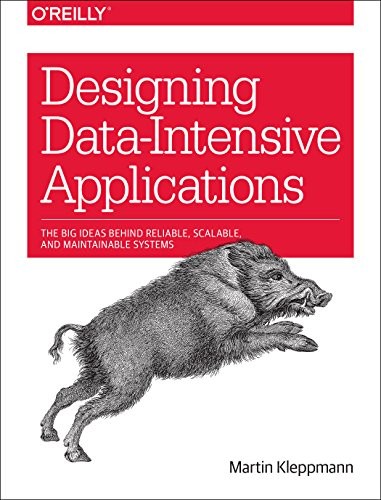
Designing Data-Intensive Applications

Martin Kleppmann

Most data problems are trade-offs someone has already named. The work is identifying the requirements underneath.

I'd never had the right vocabulary to fully articulate the trade-offs between databases, and this gave it to me. It doesn't tell you which database to pick. It teaches you the questions: what kinds of lookups you need, how the data is stored, what load it has to carry, what happens under replication lag, and which isolation level you actually have.

It's a good book on the path to becoming an architect, for anyone choosing a database or building a data-intensive application. The chapters on encoding and schema evolution, and the closing part on derived data, stuck with me most. Treating an event log as the source of truth and every store as a view built from it makes each piece something you can rebuild, which makes it far less scary to change.

It's long and dense, and a few chapters are reference material more than reading. I've come back to it more than any other engineering book.

Reviewed
September 2026
Pages
616
On Goodreads
  • distributed-systems
  • data
  • reference

4.5 / 5

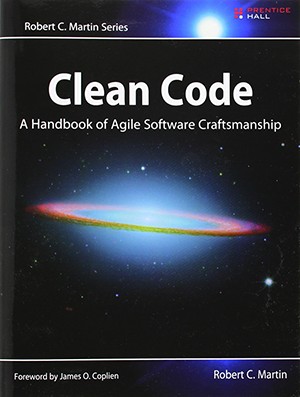
Clean Code

Robert C. Martin

Clean, clear code with an understandable layer of abstraction is all you really want.

Essentially everything they should tell you at university about writing code. Nothing in it felt revolutionary, and I'm sure it was a bigger deal when it came out, but it's useful to have a clear list of principles in one place, which I suppose is what makes it foundational.

I try hard to stick to clear layouts and small functions in my own code, though I only split a function out once it's clear it will be reused. Chopping code up just to keep functions short scatters the logic across a file. The aim is code that reads cleanly, with a layer of abstraction someone else can follow without holding the whole system in their head.

Finished
2022
Pages
464
On Goodreads
  • craft
  • code-review

4.4 / 5

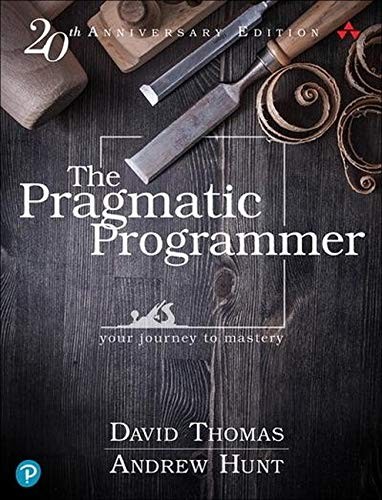
The Pragmatic Programmer

David Thomas & Andrew Hunt

Fix the broken windows and follow the systems, because whatever you leave behind becomes the reference.

Broken windows is so true, and even more so with AI. Any code you leave in place becomes the status quo, the reference both people and agents copy from, so fixing it and following the systems matters more than ever. It's tempting sometimes to drop a system and work without it because that looks like less overhead, and at some point it always bites.

DRY holds up, and design by contract is something I follow everywhere: black boxes with contracts to uphold. Orthogonality goes hand in hand with that. The sections on decoupling, events and pipelines were especially good, and I've applied them in my own work recently.

Finished
2023
Pages
352
On Goodreads
  • craft
  • career

4.0 / 5

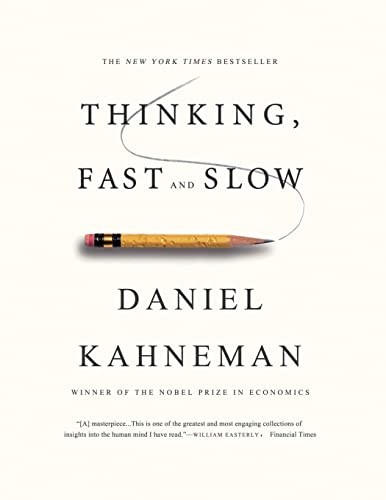
Thinking, Fast and Slow

Daniel Kahneman

Front-load the thinking. A course one degree off at the start ends up miles from where you meant to go.

I read this recently, and it landed differently in the AI age. System 1 is the part of us that jumps straight to a solution: it answers an easier question than the one asked and builds a confident story from whatever is in front of it. AI makes that instinct cheaper than ever, because a plausible solution is always one prompt away, so the risk has shifted from being slow to solving the wrong problem quickly.

A lot of my work is built on the opposite habit: slow down at the start, take the requirements and the planning seriously, and front-load the effort before committing to a solution. It's like a ship setting its course. One degree off at the start is a huge deviation by the end, and no amount of speed later makes up for it. Kahneman's planning fallacy and his outside view, which means checking how similar efforts actually went rather than how you hope yours will, are the same lesson from another angle.

Finished
2026
Pages
499
On Goodreads
  • psychology
  • decisions

4.2 / 5

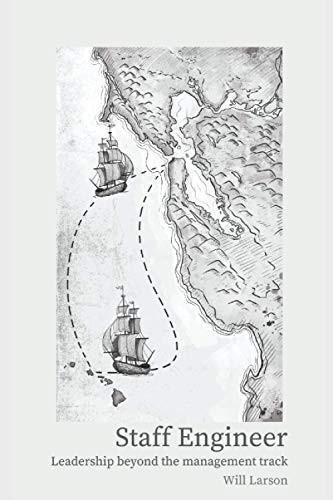
Staff Engineer

Will Larson

Your attention is the scarce resource, so build leverage that frees it for the hard, high-impact work, and share it where it scales.

A recent read, and a timely one. I'm working towards staff engineer and have been given the chance to lead some large projects, heading down the IC path as a mix of Solver and Architect, with a few organisational projects alongside. Getting buy-in to work on something large is a skill in itself, and the book is right that it comes down to aligning the work with business goals.

Snacking and preening matter less with AI, because that kind of work can now run in parallel. The real commodity is attention and deep work, and even that I can now spread across a few streams at once. I'm building leverage with my own systems to automate the shallow tasks, as in Deep Work, which frees me to focus on harder, higher-impact problems and to keep adding layers of automation and capability that raise my output.

Part of my focus now is sharing that with others. It's worth recognising where sharing multiplies the benefit and where it just becomes overhead. The projects that scale and help the whole organisation are the ones worth the effort.

Finished
2026
Pages
184
On Goodreads
  • career
  • leadership

3.8 / 5

System Design Interview

Alex Xu

Good prep: the heuristics to go off, the key building blocks and what they do, and how to estimate.

Good preparation for design interviews and for design work in general. It gives you the heuristics to reason from, the core building blocks and what each one does, and a quick way to estimate load and storage before committing to a design. I'm due for a reread.

Finished
2024
Pages
320
On Goodreads
  • interviews
  • distributed-systems

4.1 / 5

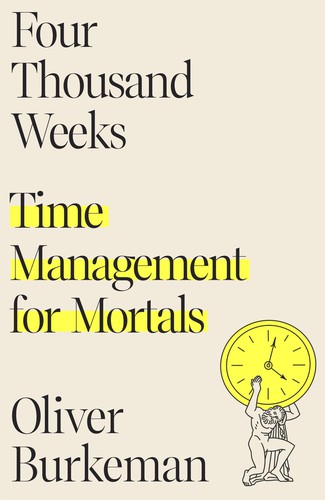
Four Thousand Weeks

Oliver Burkeman

Past a certain point output stops meaning value, so choose where your attention goes.

A zen balance to the productivity books. Where they're about doing more, this one is about recognising where you actually want to focus your effort. At a certain point more output no longer means more value, so the real decision is where to direct your attention to get the best return, and what you're willing to leave undone to do it.

Finished
2025
Pages
222
On Goodreads
  • time
  • philosophy

3.8 / 5

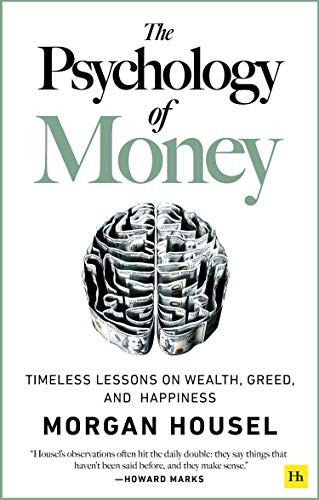
The Psychology of Money

Morgan Housel

Be optimistic, take risks and live, and put the effort into raising what you can earn rather than trimming what you spend.

It's hard to balance experiences while you're young against the pull of compounding returns, and I land a little differently from Housel on it. While you can, take as much risk as you can and expose yourself to opportunity. I'd rather focus on increasing my earning potential and the opportunities in front of me than on minimising spending.

Live life fully, work at being the best version of yourself, and build your capabilities instead of nickel-and-diming. Housel is right that optimism tends to win over the long run, and that's the part I take from it: be optimistic, take risks, and live.

Finished
2025
Pages
256
On Goodreads
  • money
  • essays

5.0 / 5

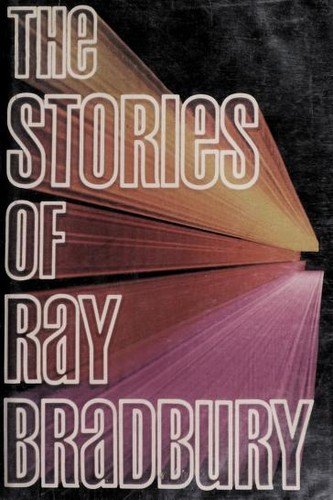
The Stories of Ray Bradbury

Ray Bradbury

Small moments shape a whole life, and we know it, yet we rarely have the discipline to set the course.

I first read Bradbury in my year 10 English class and came back to him because of how relevant he's become. For stories from the 1950s they're remarkably prophetic. There Will Come Soft Rains is a house that keeps running its routine for a family that's gone, and it's a reminder that technology only serves its purpose if it actually achieves an outcome for someone, which is sometimes hard for engineers to remember.

A Sound of Thunder is exceptional and my favourite. So many moments in your life felt insignificant at the time, yet if they hadn't happened you'd be somewhere completely different today. You can look at that in hindsight, or you can look forward and ask how the decisions you make today will shape your life tomorrow. It's the same lens as the risk taking I've written about elsewhere, and "the harder I work, the luckier I get": exposure, risk and hard work on the small decisions add up to a massive difference.

I was discussing life trajectories with a mentor recently, and he asked how many rich people would take X million dollars to go back ten years. Most would, because they know how differently they'd live. We all know it too. Ageing and cause and effect don't change, and we can read and see what happens, yet we rarely have the discipline to set that course for our own lives and change the trajectory through small decisions.

It's a nice book to just have around. Each story takes ten minutes to finish and leaves you thinking.

Finished
2021
Pages
884
On Goodreads

5.0 / 5

Unbroken

Laura Hillenbrand

What people are capable of when tested comes down to perseverance and an unwillingness to give up.

My mum brought this home years ago on a coworker's recommendation. I didn't think much of it at first, but reading it was incredibly inspiring. Louis Zamperini went from the huge high of the Olympics to surviving weeks adrift at sea and then years of imprisonment, and what he endured is hard to take in.

What stays with me is what people are capable of when they're truly tested. In the end it really does come down to perseverance and a refusal to give up, and that is what makes his story so inspiring.

Finished
2020
Pages
475
On Goodreads

5.0 / 5

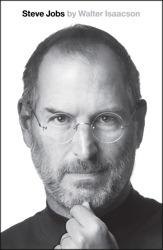
Steve Jobs

Walter Isaacson

There's no speed limit. You don't have to accept the limits other people set.

I read this years ago, and the idea that stuck was the reality distortion field: restating what you're trying to achieve until it becomes real. It's something like a hybrid of a mental placebo and manifestation. There's no speed limit, and you don't have to accept the limitations other people set out. You can go as fast as you want and do things people didn't think were possible.

It also shows you don't need to be the best engineer or the most technical person in the room. Perspective, taste, control, vision and judgement matter as much, along with being uniquely positioned and willing to be opinionated. Jobs took all of that to the absolute extreme, of course. And focus comes through as a key commodity, the thing he protected by saying no to almost everything.

Finished
2015
Pages
630
On Goodreads

5.0 / 5

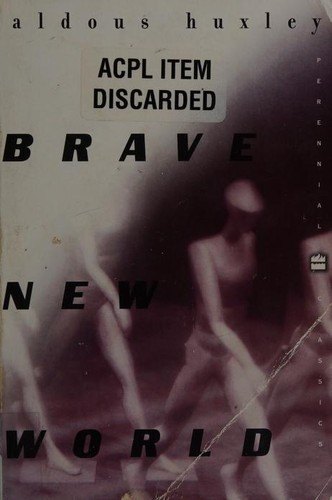
Brave New World

Aldous Huxley

Orwell feared we'd be controlled by what we hate. Huxley feared it would be by what we love, and today feels like a fusion of both.

It's Huxley against Orwell again, and the same story as bread and circuses. Our world feels like a fusion of the two. We work hard to preserve freedom from coercive government, which is Orwell's fear, while the attention economy pushes us steadily towards Huxley's. Short-form content does the job of soma: a quick hit that takes away any discomfort before it can turn into boredom, reflection or change.

It's the same debate as The Matrix. Would you rather have self-determination, freedom and the suffering that comes with them, or ignorance, satiation and happiness? John the Savage claims the right to be unhappy, and it destroys him. The harder question is what each choice does to the collective, since a society of content, distracted people is easy to steer and slow to notice what it has given up.

The conditioning is the part that feels most current. The World State conditions people from birth to love their place. Modern recommendation systems build curated feeds and feedback loops that target each person individually, and we are shaped and shifted by what we see in much the same way, only more precisely. Huxley imagined it happening in hatcheries, and we built it into our phones.

Finished
2020
Pages
288
On Goodreads

5.0 / 5

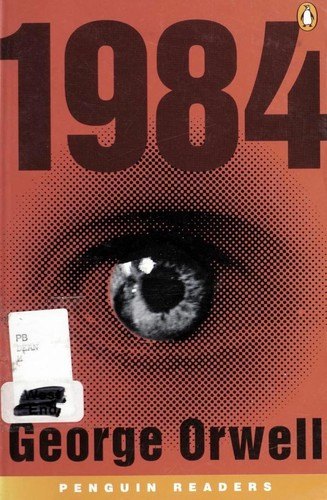
1984

George Orwell

Perpetually relevant: whoever shapes the language and the record shapes what people are able to think.

Perpetually relevant, if not exactly subtle. Read alongside Brave New World it's clear that surveillance and force are only one way control is exercised, and probably not the most effective one today. The world we live in feels like a fusion of the two.

The conditioning of thought is the part that concerns me most. Doublethink, Newspeak and the Ministry of Truth rewriting the past all have recognisable modern versions in media spin, framing and the quiet rewording of what happened yesterday. When the language narrows and the record keeps changing, dissent gets harder to even put into words.

It does simplify the complexity of war. Oceania is always at war with Eurasia, or Eastasia, and the enemy changes overnight without anyone remarking on it. Real conflicts are messier than that. But the point underneath holds up well: a permanent external enemy is useful to whoever holds power, because it keeps people afraid, united and looking outwards.

Finished
2020
Pages
298
On Goodreads

5.0 / 5

Animal Farm

George Orwell

Know where the value of your work is going, and who gets to keep it.

Boxer is the character who stays with me. "I will work harder" is admirable, and it's also exactly what gets exploited. He gives everything he has and ends up sold to the knacker to pay for the pigs' whisky. Hard work matters, but so does recognising where the value you deliver is going and who ends up with it.

That question has a new edge for me with AI. If AI makes some people 1.5 times more productive, others twice, and a few ten times, and the expectation simply rises to match whatever each person can squeeze out, then everyone gives according to their ability and the surplus goes upward. That's the logic of the farm, and it isn't one I like. To me the baseline gain should become the new expectation, and whatever someone produces above it should be theirs to benefit from.

The rest holds up as well as it ever did. The commandments are never openly broken, just quietly amended, and the pigs end up indistinguishable from the men they replaced.

Finished
2020
Reviewed
September 2026
Pages
141
On Goodreads

4.0 / 5

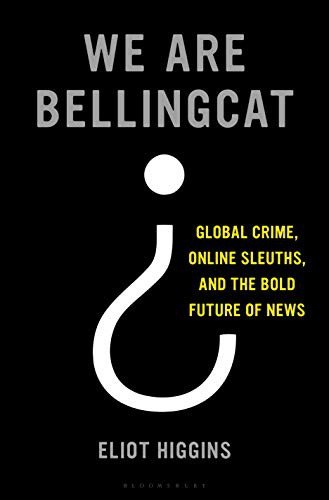
We Are Bellingcat

Eliot Higgins

Intelligence has been democratised: much of what used to need a state can now be found in public.

Interesting throughout. It's a story about the democratisation of intelligence, and how much is publicly accessible if you know where to look: photos, satellite imagery, flight records and leaked databases. The methodology is the impressive part. Every finding is built from verifiable pieces and the working is shown, so anyone can check it.

Finished
September 2024
Pages
272
On Goodreads

4.0 / 5

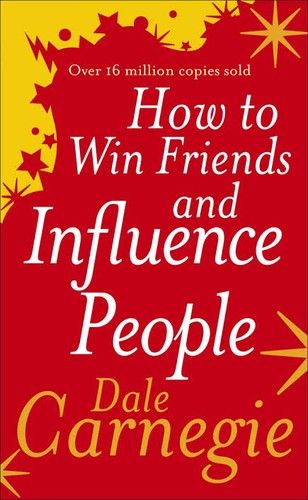
How to Win Friends & Influence People

Dale Carnegie

Be a nice person, stay out of the ivory tower, and build rapport.

Simple advice that holds up: be a nice person, stay out of the ivory tower, and build rapport with the people you work with. Most of it comes down to taking a genuine interest in others and seeing things from their side, which does more than winning any argument.

Finished
2020
Pages
288
On Goodreads

4.0 / 5

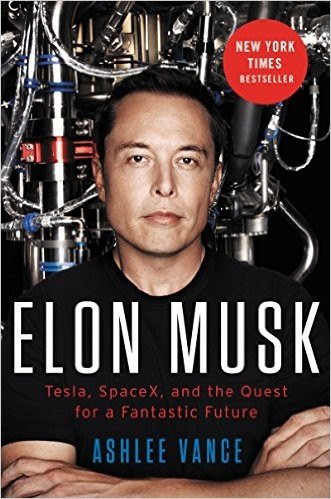
Elon Musk

Ashlee Vance

Refuse other people's limits, and set a goal big enough to organise everything else around it.

Like Steve Jobs, love him or hate him, his ability to bring about change is undeniable. At a certain point it becomes at least partly self-fulfilling. The underlying thing for me is the same as with Jobs: not accepting other people's limitations, their speed limits, or their idea of what's possible.

What ties it together is the size of the goal. Making life multiplanetary and moving the world to sustainable energy are goals big enough to organise everything else around them. Vertical integration follows from that, because when the parts you need don't exist at the price or pace you need, you build them yourself. Goals that large also make the culture of insane work feel more justifiable. I like the drive and the challenge that level of work demands. It's special forces for engineering, and pressure makes diamonds.

It raises a question I keep turning over. What has been more impactful, Steve Jobs and the iPhone, or Musk and all of his ventures? The iPhone, obviously. But Apple is far more than Steve, while Musk is the one common denominator across several large-scale ventures, and that says something on its own.

People often aren't appreciated in their own time. Will Musk be remembered like Edison or like Tesla? He isn't the most technical person in his companies, yet he may have achieved more than people who are, and I'm not sure how you scale those comparisons fairly.

Finished
2020
Pages
392
On Goodreads

4.0 / 5

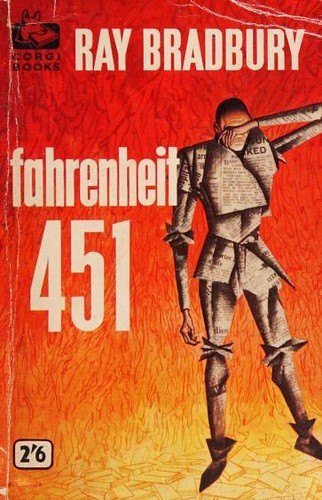
Fahrenheit 451

Ray Bradbury

Nobody needs to burn books if everyone gets their information through a few gatekeepers, fast and summarised.

There are many ways to read this, and coming back to it now as a software engineer, mine is about the guardianship of information and the gatekeepers who hold it. Bradbury's firemen burn the books, yet people had already stopped reading. The modern version doesn't need fire, just control over the way we get to information.

Google is probably the largest gatekeeper, and search results increasingly route through its own redirect links rather than pointing straight at the page. LLM providers are becoming the new gateway: you ask, and an answer comes back with the source a step removed or gone. So what happens when we can't rely on those services to stay neutral and uninterrupted? A redirect can track who reads what, and probably already does. An answer can quietly rewrite the content it summarises. Results can be sponsored. ChatGPT was never going to have ads, and now it does. OpenAI is no longer open.

The speed and shallowness angle feels even closer. People ask an AI, get an answer, have it summarised, then send a long email written by AI, which the recipient summarises again with AI. Nobody reads the original and correctness drifts with every pass. Beatty's argument was that people chose speed and simplicity before anyone had to burn a thing. We're making the same choice with better tools, and the book people memorising whole texts to keep them intact feels less far-fetched than it used to.

Finished
2020
Reviewed
September 2026
Pages
249
On Goodreads

4.5 / 5

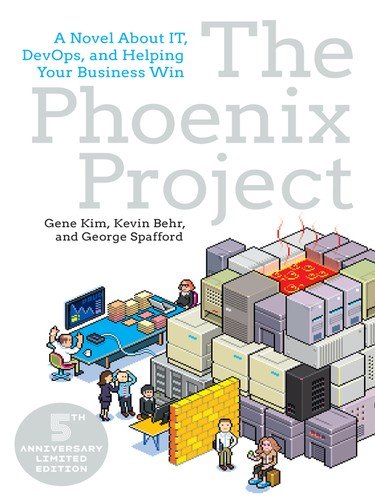
The Phoenix Project

Gene Kim

Making yourself replaceable is part of being good at your job, and it's how you get free to drive larger change.

I rated this lower at first, but it's grown on me. I've been the superstar developer it describes, Brent, the one everything routes through, and I've also recognised the bottleneck and worked to stop being it. That's hard, because making yourself more replaceable feels at odds with being valuable. But it's part of being better at your job: tooling, docs and training that let others do what only you could do before.

At a certain point, to scale, you have to look at how to remove yourself as the bottleneck and use your capabilities to drive larger change. "Any improvement not made at the bottleneck is an illusion" is the line that stays with me.

I'm less sure work in progress is the enemy to the same extent in an AI-assisted software world, where more can run in parallel. Scoping each change to the right size is the counterbalance. And the point about technical debt compounding like interest is the same one as broken windows: leave it, and it becomes the norm everyone builds on.

Finished
2024
Pages
345
On Goodreads

3.0 / 5

The Subtle Art of Not Giving a F*ck

Mark Manson

Cosmic insignificance should free you to think bigger about what's possible, not cap what you believe you're capable of.

Another book where most of it seems obvious. It isn't revolutionary, but I've recommended it to several people and I know it helped them, which counts for something.

Where I part ways is the "you are not special" section, which I find a bit of a downer. Some people would benefit from hearing it, but taken too far it becomes a defeatist mindset. Cosmic insignificance should be freeing, a reason to see how large the space of possibility is, rather than a limit on what you think you're entitled to or capable of.

Finished
2020
Pages
212
On Goodreads